15 Best AI Tools for Small Business to Boost ROI & Save Time
Table of Contents
The competitive landscape for the Best AI Tools for Small Business demands doing more with less. Implementing the best AI tools for small business is no longer optional; it is the most effective strategy to cut operational costs and scale efficiently. Below is a definitive guide to the software that delivers the highest return on investment.
Top 3 Picks at a Glance
For business owners short on time, here is the bottom line on the top-performing software we rigorously tested for integration capabilities, pricing, and overall usability:
-
Best Overall for Operations: Notion AI (Starts at $10/mo)
-
Best for Content Marketing: Jasper AI (Starts at $39/mo)
-
Best for Customer Support: Chatbase (Starts at $19/mo)
Deep-Dive Reviews: Best AI Tools for Small Business – Marketing & Content Creation
1. Jasper AI – Best Overall for AI Brand Consistency
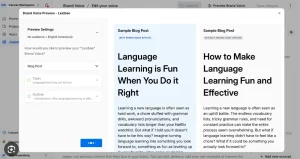
Jasper AI continues to lead the enterprise-level content space for small-to-medium businesses. Unlike general-purpose AI chat assistants, Jasper is engineered specifically for marketing teams that need to maintain a strict, unified Brand Voice across blogs, social media, and paid advertising campaigns. Marketing teams comparing the best AI tools for small business consistently rank Jasper first for voice control.
-
Key Features:
-
Brand Voice & Knowledge Base: Upload your brand guidelines, product catalogs, and style guides to ensure every generated output aligns with your tone.
-
Campaign Builder: Generate full marketing campaigns (landing page copy, email sequences, and ad variations) from a single brief.
-
Native WordPress Integration: Push optimized blog post drafts directly into your WordPress CMS without manual formatting.
-
-
Pros:
-
Includes built-in plagiarism checks powered by Copyscape.
-
Allows multi-user collaboration with customized workspace permissions.
-
-
Cons:
-
Higher starting price point compared to standalone AI writers.
-
-
Pricing: Starts at $39/month (Creator plan) when billed annually. Pro plans begin at $59/month per user.
-
Expert Take: If you run an agency or manage multiple brand assets, Jasper’s ability to memorize distinct brand voices saves hours of manual editing.
2. Copy.ai – Best for GTM Automation and Sales Sequences
Copy.ai has evolved from a simple copy generator into a robust Go-To-Market (GTM) platform ranked among the best AI tools for small business. It excels at automating cold outbound sales emails, translating long-form content into multi-channel snippets, and updating CRM records without human intervention.
-
Key Features:
-
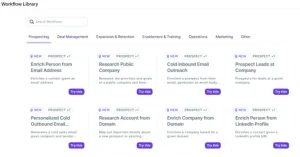
OS Workflows: Set up automated logic triggers (e.g., “Scrape sales prospect LinkedIn profile $\rightarrow$ generate personalized outreach email $\rightarrow$ push draft to CRM”).
-
Infinitely Scalable Templates: Access pre-built templates for press releases, Amazon product listings, and Google Ad copy.
-
SOC 2 Type II Compliance: Enterprise-grade security protocols ensuring your customer intelligence remains private.
-
-
Pros:
-
Generous free-tier plan for small business owners testing the waters.
-
Extremely high execution speed for short-form sales content.
-
-
Cons:
-
Long-form blog outputs often require human editing for depth and E-E-A-T signals.
-
-
Pricing: Free plan available (2,000 words/mo). Paid plans start at $36/month (Starter) and $186/month (Advanced) for teams.
-
Expert Take: Use Copy.ai primarily for top-of-funnel lead generation and micro-copy (meta descriptions, social posts, ad headlines) rather than core pillar blog articles.
3. Canva Magic Studio – Best for Visuals & Social Media Graphics
Small business owners rarely have the budget for a full-time in-house graphic designer. Canva Magic Studio bridges this gap by integrating generative AI features directly into a user-friendly drag-and-drop design platform.

-
Key Features:
-
Magic Media (Text-to-Image/Video): Generate custom, royalty-free background images and short video clips using natural language prompts.
-
Magic Switch: Instantly re-format a long blog post draft into a slide presentation, or resize an Instagram post into a LinkedIn banner with one click.
-
Magic Eraser & Edit: Remove unwanted background elements or replace objects in product photos seamlessly.
-
-
Pros:
-
Zero learning curve; built into the intuitive Canva environment.
-
Huge cost savings compared to hiring freelance graphic designers for daily asset creation.
-
-
Cons:
-
Text-to-image outputs can occasionally look stylized or synthetic.
-
-
Pricing: Free basic plan. Canva Pro starts at $15/month per user or $10/month (billed annually).
-
Expert Take: Combine Canva Magic Studio with your original product photographs to create professional hero images and infographical assets for your WordPress site.
4. Descript – Best for Video Editing & Content Repurposing
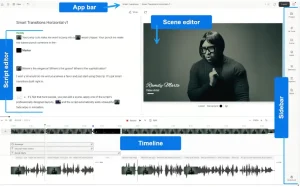
Video marketing drives the highest conversion rates, but video editing is notorious for eating up hours of a founder’s time. Descript simplifies video and podcast editing by converting recorded media into a text transcript—allowing you to edit video simply by editing text.
-
Key Features:
-
Text-Based Editing: Delete a word or sentence from the generated text transcript, and Descript automatically cuts that exact timestamp from the audio/video file.
-
Filler Word Removal: Automatically detect and purge “ums,” “ahs,” and awkward silences in one click.
-
Studio Sound: AI-powered noise suppression that turns low-quality microphone audio into studio-grade sound.
-
-
Pros:
-
Transforms long-form video podcasts into dozens of YouTube Shorts or TikToks within minutes.
-
Clones your voice to insert missing words without re-recording audio.
-
-
Cons:
-
Transcription accuracy can dip with heavy regional accents or noisy background environments.
-
-
Pricing: Free plan available (1 hour of transcription/mo). Creator plan starts at $12/month; Pro plan at $24/month.
-
Expert Take: Essential for business owners producing YouTube content. Extract audio snippets from long client interviews to embed directly into your WordPress blog posts to maximize reader time-on-page.
How to Implement Best AI Tools for Small Business in Your Workflow
Successfully adopting these platforms requires a strategic approach rather than a mass rollout.
-
Start by auditing your most time-consuming weekly tasks, such as answering generic customer inquiries or drafting social media posts.
-
Select one specific tool to solve that primary bottleneck and train your core team on its interface for 30 days.
-
Document the standard operating procedures (SOPs) for the new automated workflow before introducing additional software into your ecosystem.
Deep-Dive Reviews: Best AI Tools for Small Business Productivity
Efficiency is the lifeblood of any small business. The following best AI tools for small business are designed to eliminate administrative bloat, automate repetitive tasks, and keep your remote or in-house teams aligned without constant micromanagement.
5. Notion AI – Best for Centralizing SOPs and Knowledge Management
Notion was already a powerhouse for wiki building and project management, but Notion AI transforms it into an interactive brain for your company. Instead of searching through endless folders for a specific company policy or project update, you can simply “ask” your workspace.

Key Features:
-
-
Q&A Search: Ask questions like, “What is our onboarding process for new contractors?” and Notion AI will instantly synthesize an answer based on your existing documents.
-
Action Item Extraction: Instantly pull actionable tasks, deadlines, and assignees from chaotic meeting notes.
-
Autofill Tables: Automatically extract specific data points (like client names or project statuses) from text documents and populate them into a neat database.
-
-
Pros:
-
Replaces multiple business tools (Google Docs, Trello, Evernote) in one unified workspace.
-
Incredibly intuitive for writing and formatting standard operating procedures (SOPs).
-
-
Cons:
-
Without strict organizational rules, the workspace can become cluttered as the team scales.
-
-
Pricing: Notion is free for basic use. The AI add-on costs $8 to $10/month per member.
-
Expert Take: For digital agencies or service-based businesses, documenting your SOPs inside Notion AI allows new hires to onboard themselves simply by chatting with the company database.
6. Zapier Central (Zapier AI) – Best for No-Code Workflow Automation
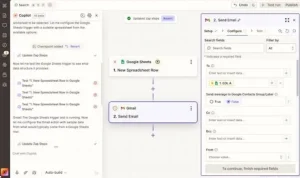
Zapier is the glue that connects over 6,000 web apps. With the introduction of Zapier Central and AI features, you no longer need to be a systems architect to build complex automations. You can now build workflows using plain English commands.
Key Features:
-
-
AI Copilot: Type a prompt like, “When I get an email from a VIP client, send a Slack message to the sales team and create a Trello card,” and Zapier builds the workflow automatically.
-
Zapier Central Bots: Create custom AI bots that operate across your apps (e.g., a bot that monitors incoming support tickets and drafts responses based on your historical data).
-
Data Formatting: AI steps can reformat messy data (like dates or names) between apps without requiring complex spreadsheet formulas.
-
-
Pros:
-
Unrivaled app ecosystem; if a software exists, Zapier likely integrates with it.
-
Massive reduction in manual data entry errors.
-
-
Cons:
-
High-volume, multi-step “Zaps” can become expensive quickly on higher-tier plans.
-
-
Pricing: Free core plan (100 tasks/mo). Paid plans start at $19.99/month.
-
Expert Take: This is where true business automation happens. Start small by automating lead capture from your WordPress forms directly into your CRM.
7. Fireflies.ai – Best for Meeting Intelligence and Transcriptions
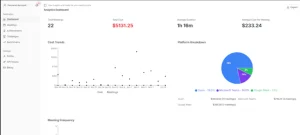
For business owners, being present during sales calls or team meetings is critical. Fireflies.ai acts as your automated executive assistant, joining your Google Meet, Zoom, or Microsoft Teams calls to record, transcribe, and analyze the conversation.
-
Key Features:
-
AI Super Summaries: Generates a highly accurate overview of the meeting, complete with bulleted action items and decisions made.
-
CRM Integration: Automatically logs meeting notes, transcripts, and audio links directly under the corresponding contact in Salesforce, HubSpot, or Pipedrive.
-
Conversation Intelligence: Tracks speaker talk-time, sentiment, and mentions of competitors or pricing objections.
-
-
Pros:
-
Frees you from taking manual notes so you can focus on active listening and closing deals.
-
Makes past meetings completely searchable by keyword.
-
-
Cons:
-
Requires clear audio; heavy cross-talk can confuse the transcript attribution.
-
-
Pricing: Free basic tier available. Pro plan starts at $10/month (billed annually).
-
Expert Take: Implement Fireflies for all client discovery calls. The AI-generated summaries ensure you never miss a promised deliverable, drastically improving client retention and trust.
8. ClickUp Brain – Best for AI-Powered Project Management
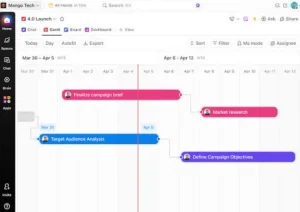
ClickUp is a robust project management platform, and ClickUp Brain represents one of the deepest integrations of AI in the project management space. It connects your company’s tasks, documents, and people into a single neural network.
-
Key Features:
-
AI Project Manager: Automatically generate daily stand-up reports, summarize long comment threads on overdue tasks, and predict project bottlenecks.
-
AI Knowledge Manager: Ask questions about company workflows or specific project statuses without interrupting your team via Slack.
-
AI Writer for Tasks: Instantly draft detailed task descriptions, subtasks, and project briefs.
-
-
Pros:
-
Eliminates the need for status-update meetings.
-
Deeply integrated; you don’t have to switch tabs to use the AI.
-
-
Cons:
-
ClickUp’s overall interface can be overwhelming for teams migrating from simpler tools like Trello.
-
-
Pricing: ClickUp is free to start. ClickUp Brain is available as a $7/month add-on per member on paid plans (starting at $7/mo).
-
Expert Take: If you are managing remote contractors across different time zones, ClickUp Brain’s automated progress summaries keep everyone aligned asynchronously.
Deep-Dive Reviews: Best AI Tools for Customer Support & Finance
Excellent customer service and tight financial management are non-negotiable for small business survival. These best AI tools for small business help you scale support instantly and keep your books balanced without needing a full-time support team or an expensive outsourced accounting firm.
9. Chatbase – Best for Custom AI Chatbots
Gone are the days of rigid, frustrating decision-tree chatbots. Chatbase allows you to build a custom GPT-powered chatbot trained exclusively on your specific business data.
-
Key Features:
-
Custom Knowledge Training: Feed the AI your website URL, FAQs, PDF manuals, and return policies. The bot will only answer questions based on the data you provide, preventing “hallucinations.”
-
Omnichannel Deployment: Embed the chat widget directly on your WordPress site, or integrate it with Slack, WhatsApp, and Zapier.
-
Lead Generation Mode: Program the bot to collect user emails and phone numbers during the conversation before transferring complex queries to a human agent.
-
-
Pros:
-
Setup takes less than 10 minutes; no coding required.
-
Provides 24/7 instant responses, drastically improving customer satisfaction (CSAT) scores.
-
-
Cons:
-
Heavily reliant on the quality of your internal documentation. If your FAQs are outdated, the bot’s answers will be too.
-
-
Pricing: Free tier (20 messages/mo). Paid plans start at $19/month (Hobby) up to $399/month for enterprise limits.
-
Expert Take: For service-based businesses, deploy Chatbase on your pricing or booking page. It acts as an automated sales development rep (SDR), answering prospect objections at 2 AM and capturing the lead.
10. Tidio – Best for E-commerce Helpdesks (Lyro AI)
Tidio combines live chat, helpdesk ticketing, and AI into one dashboard. Their proprietary AI, Lyro, is purpose-built for customer support teams, especially those running e-commerce stores (WooCommerce or Shopify). Selling on marketplaces too? See our eBay dropshipping guide.
-
Key Features:
-
Lyro Conversational AI: Automatically resolves up to 70% of common customer questions (e.g., “Where is my order?”, “What is your refund policy?”).
-
Intent Detection: Analyzes customer messages to prioritize urgent issues (like payment failures) and routes them immediately to a human agent.
-
Pre-built E-commerce Workflows: Native integrations to check order statuses, process returns, and offer discount codes within the chat window.
-
-
Pros:
-
Seamless integration with major e-commerce platforms.
-
Combines AI automation with a robust human-agent ticketing system.
-
-
Cons:
-
Pricing scales up quickly based on the number of conversations Lyro handles.
-
-
Pricing: Free plan available (limited human chat). Lyro AI add-on starts at $39/month (Lyro AI plan).
-
Expert Take: If you run a WordPress/WooCommerce store, Tidio is essential. It prevents your inbox from overflowing during peak seasons like Black Friday.
11. QuickBooks Online (Intuit Assist) – Best for AI Bookkeeping
QuickBooks is the gold standard for small business accounting. With the rollout of “Intuit Assist,” it brings generative AI directly into your financial workflows, acting as a virtual CFO.
-
Key Features:
-
Automated Categorization: Machine learning automatically categorizes imported bank transactions, flagging anomalies for your review.
-
Cash Flow Forecasting: Analyzes historical data to predict future cash flow gaps, alerting you before you miss payroll or vendor payments.
-
Custom Reporting via Prompts: Ask Intuit Assist questions in plain English, such as, “Show me my profit margins for Q3 compared to last year,” and it instantly generates the report.
-
-
Pros:
-
Significantly reduces the hours spent on month-end reconciliation.
-
Provides high-level financial insights usually reserved for enterprise software.
-
-
Cons:
-
Requires a paid QuickBooks Online subscription; Intuit Assist is not a standalone product.
-
-
Pricing: QuickBooks Online plans start at $30/month (Simple Start).
-
Expert Take: Never fall behind on your books again. The predictive cash flow feature is a lifesaver for seasonal businesses trying to manage inventory purchases.
12. Gusto (Gusto AI) – Best for HR and Payroll Automation
Managing payroll, benefits, and HR compliance is a massive headache for small business owners. Gusto simplifies this, and their AI features help founders navigate complex HR scenarios.
-
Key Features:
-
AutoPilot Payroll: If your team works salaried or predictable hours, the AI automatically runs payroll on schedule without manual approval.
-
Smart Job Descriptions: Generate compliant, compelling job descriptions instantly based on role titles and industry standards.
-
Compliance Alerts: AI monitors changing state and federal tax laws, alerting you proactively if your payroll setup needs adjustment.
-
-
Pros:
-
User-friendly interface makes complex HR tasks accessible.
-
Integrates flawlessly with accounting tools like QuickBooks and Xero.
-
-
Cons:
-
Geared heavily toward US-based businesses; international contractor support is improving but less robust.
-
-
Pricing: Plans start at $40/month + $6/month per person (Simple plan).
-
Expert Take: Gusto handles the administrative burden of HR so you can focus on building company culture. The automated state-tax compliance feature alone is worth the subscription cost.
Deep-Dive Reviews: Best AI Tools for Sales, Research & Communication
13. Apollo.io – Best for B2B Sales & Lead Generation
For B2B small businesses, finding qualified leads and doing cold outreach is often a grueling, manual process. Apollo.io combines a massive B2B contact database with an AI-powered sales assistant to automate your entire outbound pipeline.
-
Key Features:
-
AI Writing Assistant: Automatically generates hyper-personalized cold emails based on the prospect’s LinkedIn profile or recent company news.
-
Lead Scoring: The AI analyzes your past successful deals and assigns a score to new leads, telling your sales team exactly who to call first.
-
Massive Contact Database: Access verified emails and direct-dial phone numbers for millions of US-based professionals.
-
-
Pros:
-
Replaces the need for multiple expensive tools (e.g., combining ZoomInfo and Outreach.io into one platform).
-
Free tier is generous enough for solo founders to start booking meetings immediately.
-
-
Cons:
-
Deliverability can drop if you don’t properly warm up your email domains before launching massive campaigns.
-
-
Pricing: Free plan available. Paid plans start at $49/month (Basic) when billed annually.
-
Expert Take: If your growth depends on B2B client acquisition, Apollo is non-negotiable. Use the AI email generator to create A/B tests for your subject lines to maximize open rates.
14. Perplexity AI – Best for Market Research & Strategy
Standard search engines are becoming cluttered, making market research tedious. Perplexity AI functions as a “conversational answer engine,” replacing traditional Google searches for business strategy, competitor analysis, and industry trend research. Analysts shortlisting the best AI tools for small business use Perplexity to verify vendor claims fast.
-
Key Features:
-
Pro Search: AI asks you clarifying questions to narrow down exactly what kind of market data or business insight you are looking for.
-
Real-Time Web Access & Citations: Unlike older AI models, Perplexity pulls live data from the web and footnotes every claim with a clickable source, ensuring high accuracy.
-
File Analysis: Upload long PDF industry reports or competitor whitepapers, and ask the AI to extract key statistics or summarize the core strategies.
-
-
Pros:
-
Drastically cuts down the time spent researching new content topics or market trends.
-
Highly accurate and transparent due to strict source citations.
-
-
Cons:
-
Not designed for creative writing or marketing copy generation (use Jasper for that).
-
-
Pricing: Free basic version. Perplexity Pro costs $20/month.
-
Expert Take: Before writing a new pillar blog post or launching a new service, run your idea through Perplexity to analyze what competitors in the US market are currently doing and identify content gaps.
15. Grammarly Business – Best for Team Communication & Brand Tone QA
As your small business grows, maintaining professional communication across a remote or decentralized team becomes difficult. Grammarly Business uses AI to ensure every email, slack message, and support ticket sent by your team is error-free and aligned with your brand’s voice.
-
Key Features:
-
Generative AI (GrammarlyGO): Helps team members draft replies instantly in their inbox or CMS based on a short prompt.
-
Company Style Guide: Set specific rules (e.g., “Always capitalize ‘WordPress'”, or “Never use the word ‘cheap’, use ‘affordable’ instead”) that the AI enforces across all team members.
-
Tone Analytics: Dashboards for managers to see if customer support replies are trending as “friendly,” “urgent,” or “frustrated.”
-
-
Pros:
-
Works everywhere: Integrates natively into Chrome, desktop apps, Slack, Gmail, and WordPress.
-
Prevents costly miscommunications and unprofessional typos.
-
-
Cons:
-
The aggressive grammar suggestions can sometimes strip the “human personality” out of casual writing if followed too strictly.
-
-
Pricing: Starts at $15/month per member (billed annually).
-
Expert Take: This is a vital quality assurance (QA) tool. It acts as an automated editor for your entire company, ensuring that even junior hires communicate with the polish of seasoned professionals.
Use this quick reference to shortlist the best AI tools for small business by category before reading the full reviews.
| Category | Top pick | Why it fits |
|---|---|---|
| Marketing & content | Jasper | Brand voice + campaigns |
| Productivity | Notion AI / ClickUp Brain | Docs + project automation |
| Support & finance | Tidio (Lyro) / Gusto | 24/7 replies + payroll |
| Sales & research | Apollo.io / Perplexity | Outbound + verified answers |
How to Choose & Implement AI in Your Small Business
Selecting from dozens of software platforms can easily trigger decision paralysis. To maximize your return on investment and avoid paying for unused software subscriptions, follow this four-step adoption framework:
-
Audit Repetitive Bottlenecks: Identify processes where your team spends over five hours weekly on low-value tasks like manual scheduling, data entry, or drafting routine email replies.
-
Prioritize Integration Over Novelty: Choose software that natively connects with your existing tech stack (such as your WordPress CMS, CRM, or payment gateway) to prevent isolated data silos.
-
Start with One Category: Roll out a single platform at a time—such as an automated customer support bot—and run it for 30 days to measure efficiency gains before adding more tools.
-
Establish Data Security SOPs: Train your staff never to input confidential financial records, proprietary code, or sensitive customer PII into public, unvetted AI models.
Frequently Asked Questions (FAQs)
How much should a small business budget for the best AI tools for small business?
Most small businesses can adopt the best AI tools for small business for 50 to 200 dollars per month. Focus first on high-impact categories like automated bookkeeping or content generation before upgrading to multi-seat enterprise software.
Is AI safe for handling sensitive client and business data?
Yes, provided you choose platforms with enterprise-grade security compliance such as SOC 2 Type II. Always review a vendor data policy to ensure your inputs are kept private and not used to train public language models.
Do I need a developer to integrate the best AI tools for small business into my WordPress site?
No. Most modern software platforms offer no-code WordPress plugins or simple embed scripts. However, configuring complex API workflows that sync multiple business systems may benefit from technical automation services.
Final Verdict: Building Your Automated Business Ecosystem
Adopting the best AI tools for small business is no longer about keeping up with trends—it is about establishing a sustainable operational advantage. By strategically pairing these platforms with your core business model, you can reduce operational overhead, scale your marketing output, and deliver 24/7 client satisfaction. For regulated use cases, align your rollout with the NIST artificial intelligence framework before scaling the best AI tools for small business across teams. In short, the best AI tools for small business pay for themselves when matched to one bottleneck at a time.
Need assistance building a high-converting digital presence? Whether you need custom WordPress development, technical SEO optimization, or advanced business automations, connect with our team to streamline your growth.

Santo Ae is a senior business strategist at A Business Owner, with 8+ years helping US SMBs scale via email marketing, financial planning, and AI operations. Method: vendor pricing analysis, campaign benchmarks, and operator interviews. Author of 1,566 business guides since 2022.